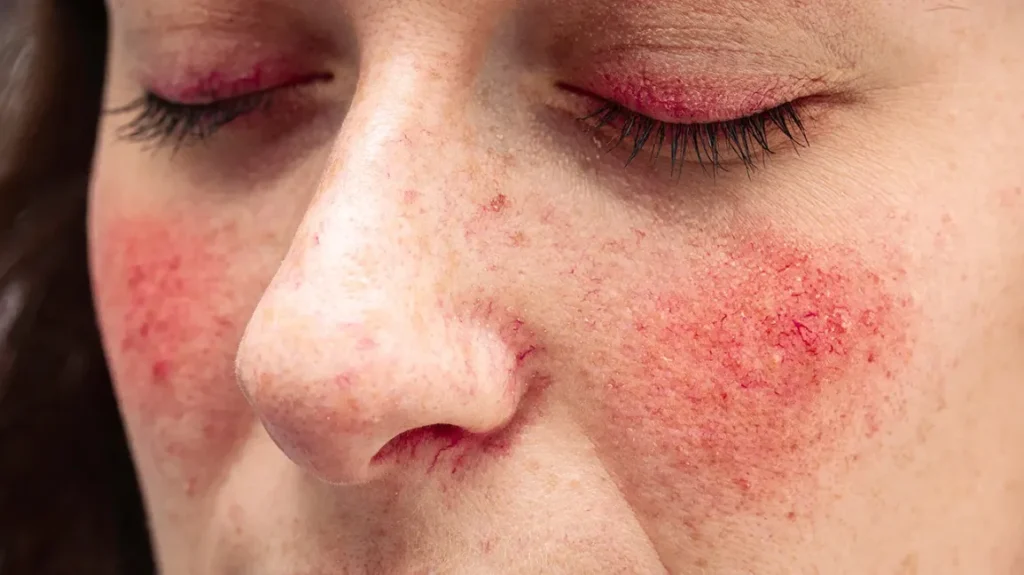
Rosacea is a chronic skin condition that commonly affects the face and causes redness, visible blood vessels, and skin sensitivity. The condition may develop gradually and can become more noticeable over time if not managed properly. Although rosacea is not contagious, it can affect skin appearance and confidence. Understanding the causes, symptoms, and treatment options helps support healthier skin and better long-term management.
Understanding Rosacea
Rosacea mainly affects the central areas of the face, including the cheeks, nose, forehead, and chin. The condition often causes facial redness and flushing that may appear and disappear in the early stages. Over time, symptoms can become more persistent if left untreated.
Individuals with sensitive skin may be more likely to experience rosacea-related irritation and flare-ups.
Common Symptoms of Rosacea
Recognizing rosacea symptoms early helps improve skin management and reduce flare-ups. Common symptoms include persistent facial redness, visible blood vessels, skin sensitivity, and episodes of flushing. Some individuals may also develop small red bumps, swelling, dryness, or burning sensations on the skin.
In severe cases, the skin may become thickened, especially around the nose area.
Causes and Triggers of Rosacea
The exact cause of rosacea is not fully understood, but several factors may contribute to the condition. Genetics, environmental influences, and immune system responses are believed to play a role. Certain triggers can worsen rosacea symptoms and increase skin irritation.
Common triggers include sun exposure, heat, spicy foods, stress, alcohol, and harsh skincare products. Weather changes and hot beverages may also trigger facial flushing in some individuals.
Importance of Early Skin Care
Early skincare and dermatological care help prevent rosacea symptoms from worsening over time. Identifying personal triggers and following a gentle skincare routine can improve skin comfort and reduce redness. Professional skin evaluation also helps determine the severity of the condition and suitable treatment methods.
Skin Treatment Options for Rosacea
Modern dermatological treatments can help control rosacea symptoms and improve skin appearance. Treatment options may include topical skincare therapies, medications, laser procedures, and treatments designed to reduce redness and visible blood vessels.
Personalized skincare plans are often recommended based on skin sensitivity and the severity of symptoms.
Skin Care Tips for Managing Rosacea
Daily skincare habits play an important role in managing rosacea. Using mild skincare products and sunscreen regularly helps protect sensitive skin from irritation and sun damage. Gentle cleansing and proper hydration also support healthier skin.
Avoiding known triggers and maintaining a consistent skincare routine can help minimize flare-ups and improve overall skin health.
When to Consult a Dermatologist
Dermatological consultation is important if facial redness, flushing, or skin irritation becomes persistent or worsens over time. Early medical care helps identify suitable treatments and prevents complications related to sensitive skin conditions.
Conclusion
Rosacea is a common chronic skin condition that can cause redness, sensitivity, and visible skin changes. Understanding symptoms, identifying triggers, and following proper skin treatment options help improve skin health and reduce flare-ups. Early dermatological care and personalized skincare routines are essential for long-term rosacea management and healthier skin.